💌 [email protected] 📌 Khulna-9291,BD.

How to Choose the Best Antivirus Software in 2026
Antivirus software helps protect your PC from online threats. It keeps your personal information, files, banking details, and other sensitive data safe.
To find the best options, we tested more than 20 antivirus programs. Antivirus protection has been important since the early days of personal computers. Wherever software exists, malware is likely to exist too.
Based on our testing and expert reviews, Bitdefender Antivirus Plus and Norton AntiVirus Plus are our top picks. However, all the antivirus programs on this list earned at least four stars. Each one offers strong protection, and at least one should be a good match for your needs.
Every single day, over 450,000 new malware samples pop up around the world. AV-TEST, a respected security lab, has tracked threats for more than 20 years, and that’s the number they report. It’s pretty simple: your device is a target. The real question isn’t if you need protection, but which kind actually does the job—and whether you’re shelling out for stuff you don’t care about.
The antivirus market is incredibly crowded right now. Some programs really are worth your money, but plenty pile on features that sound important but don’t actually do much. A few are downright shady. This guide will help you figure out how to pick the right antivirus for 2026, what matters, what’s just marketing fluff, and which brands actually deserve your cash.
Table of Contents
Do You Really Need Antivirus in 2026?
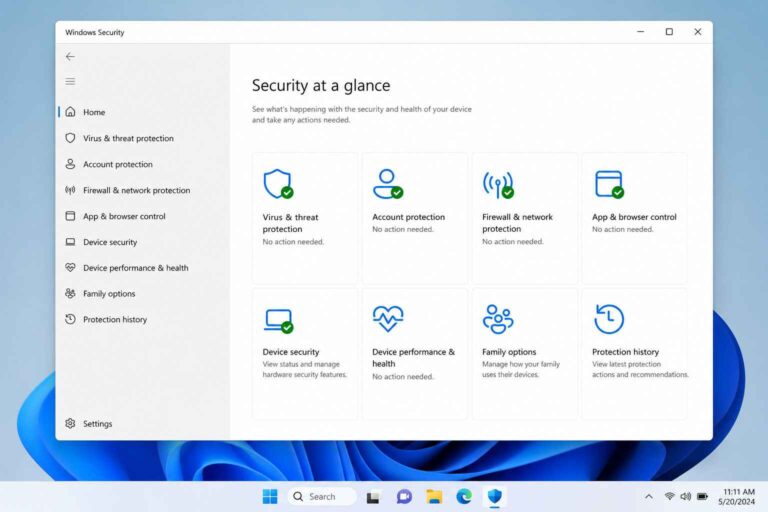
Windows 11 includes Microsoft Defender by default, and it’s gotten a lot better. Defender scored a perfect 6 out of 6 for protection in AV-TEST’s 2025 reports. So if you just use your computer for basic stuff, stick to well-known sites, and avoid sketchy downloads, Defender is probably fine.
But let’s be honest—most people don’t fall into that “low-risk” category.
Antivirus software helps protect your PC from online threats. It keeps your personal information, files, banking details, and other sensitive data safe.
To find the best options, we tested more than 20 antivirus programs. Antivirus protection has been important since the early days of personal computers. Wherever software exists, malware is likely to exist too.
Based on our testing and expert reviews, Bitdefender Antivirus Plus and Norton AntiVirus Plus are our top picks. However, all the antivirus programs on this list earned at least four stars. Each one offers strong protection, and at least one should be a good match for your needs.
Every single day, over 450,000 new malware samples pop up around the world. AV-TEST, a respected security lab, has tracked threats for more than 20 years, and that’s the number they report. It’s pretty simple: your device is a target. The real question isn’t if you need protection, but which kind actually does the job—and whether you’re shelling out for stuff you don’t care about.
The antivirus market is incredibly crowded right now. Some programs really are worth your money, but plenty pile on features that sound important but don’t actually do much. A few are downright shady. This guide will help you figure out how to pick the right antivirus for 2026, what matters, what’s just marketing fluff, and which brands actually deserve your cash.
7 Key Things to Look for in Antivirus Software
Detection Rate
This is maybe the most important stat. It’s the percentage of real malware the software catches before it causes damage.
AV-TEST and AV-Comparatives test thousands of real malware samples, not just easy “demo” threats that a company selects. Ignore any product that claims “99.9% protection” in its own ad copy—only trust independent test results. If an antivirus scores below 97% in real-world lab results, cross it off your list immediately. Most of the good options fall between 98% and 100%. Differences at the top are minor, so other factors matter more once you’re down to the best few.
System Performance Impact
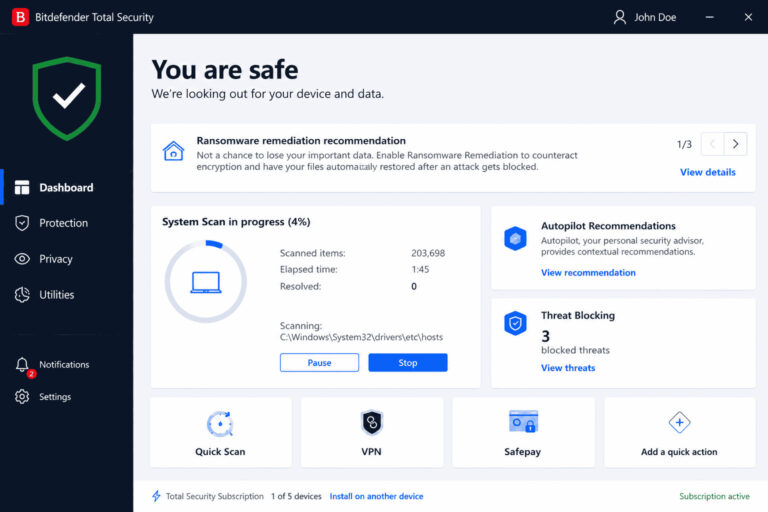
Some antivirus programs slow your device to a crawl. Others you barely notice. Bitdefender is well-known for having both high protection and minimal slowdown thanks to its cloud-based scanning. Kaspersky is also light and reliable. Older versions of McAfee were painfully heavy, but they’ve gotten better recently.
If your computer is older or has less RAM, pay extra attention to this—AV-TEST lists actual numbers for app load times, downloads, and web browsing. Don’t buy until you check them out.
Real-Time vs. On-Demand Scanning
Real-time protection keeps an eye on everything you click, download, or open in real time. On-demand scans are ones you start yourself.
You really need both. Real-time protection is the only thing that blocks an active attack—if it’s missing or half-baked, threats will get through before you know it. Free versions often skimp or skip real-time protection. Make sure it’s included before you pick a product.
Extra Features
Antivirus suites love to throw in extras: VPNs, password managers, firewalls, parental controls, webcam blockers, cloud backups, identity theft monitoring, and more. Some of it’s actually useful, but a lot is just there to push you toward a pricier plan.
Norton 360’s dark web monitoring, for instance, notifies you if your info shows up in a breach—a feature that saves you from manually checking HaveIBeenPwned every couple of months. Built-in VPNs, on the other hand, are usually capped at tiny data limits unless you upgrade. If you really want a VPN or password manager, buy a stand-alone one like Bitwarden or 1Password, not a half-baked bonus add-on.
Decide which features you’ll actually use and only pay for those.
Number of Devices Covered
A Norton 360 Standard plan covers one device and costs about $40 after the initial discount, while Deluxe covers five devices for around $55. Covering multiple computers or phones? The five-device option is much cheaper per device.
Also, check which types of devices are included. Some plans only work on Windows, while most people need something that works on Mac, Android, and iOS too.
Price and Renewal Costs
Here’s where most people get caught off-guard.
First-year discounts are massive—sometimes 70% off. But after that, the price jumps. For example, Bitdefender Total Security might be $25 in year one, then leap to $90 at renewal. They do this on purpose.
Set a calendar reminder for a month before your renewal date. Most companies, including Bitdefender, Norton, Kaspersky, and Malwarebytes, will let you cancel, then sign up again as “new” and grab the introductory rate again. Loads of people overpay for years just because they don’t check.
And always buy straight from the company’s real site—not a third party. Some comparison sites have different, less-friendly cancellation policies hidden in their fine print.
Customer Support Quality
Maybe you’ll never need help, but if your antivirus locks up an important file by mistake or breaks something you need for work, you’ll want fast, real support.
Norton and Bitdefender both offer chat or phone support around the clock. Malwarebytes has email and chat but no phone line. Kaspersky’s support is strong, too. Most free products just offer community forums.
If you’re not comfortable troubleshooting on your own, make support part of your decision.
Free vs Paid Antivirus: What’s the Real Difference?
Free antivirus software isn’t useless. Avast Free, AVG Free, and Bitdefender Antivirus Free do well in lab tests at the basics. If you can’t or won’t pay, these are fine for basic protection.
But free versions usually cut corners in noticeable ways, and those gaps matter for most people.
| Feature | Free Antivirus | Paid Antivirus |
|---|---|---|
| Malware detection | Good to very good | Very good to excellent |
| Real-time protection | Basic or limited | Full |
| Ransomware protection | Rare, stripped down | Standard |
| Phishing protection | Basic | Advanced, all browsers |
| Customer support | Forums only | Live chat, phone |
| Dark web monitoring | Not included | Usually included |
| Ads and upsells | Constant | None |
| Performance impact | Often heavier | Better optimized |
Performance impact | Often heavier | Better optimized
The real headache with free antivirus is non-stop ads and upgrade nags. Avast Free, for example, will push you toward paid upgrades at every turn. If you’re tech-savvy, it’s mostly just annoying, but for less experienced users, it gets confusing fast.
If you bank, shop, or work from your device, a paid plan is usually less than $5 a month. It’s worth it for the extra coverage.
Best Antivirus Software in 2026: Top Picks
The options below all score above 98% for real-world malware, have solid privacy records, and clear pricing.
Bitdefender Total Security: Best Value
Bitdefender routinely tops AV-TEST’s rankings. Its latest results? Perfect 6 for protection, 5.5 for performance. It covers up to five gadgets across Windows, Mac, Android, and iOS, and actually includes working firewall and anti-ransomware tools that can restore files hit by ransomware.
It has a simple, clean interface, runs quick scans, and doesn’t slow things down.
Best for: Families or folks who want solid all-around protection minus the fuss.
Price: Around $25 the first year, $89.99 on renewal (but you can cancel and grab the newbie deal again every year).
Norton 360 Deluxe: Best for Identity Protection
Norton scores at the top for malware detection. But its standout feature is identity protection: dark web monitoring, 50GB cloud backup, and a useful password manager. LifeLock plans go even further with ID theft insurance, but those are pricier.
Best for: Anyone serious about protecting identity and privacy, not just blocking malware.
Price: About $35 for five devices in year one, $104.99 after renewal.
Malwarebytes Premium: Best for Cleaning Up Malware
Malwarebytes built its name cleaning out stubborn infections that others miss. The Premium version adds live protection, a browser guard that blocks malicious and ad-heavy websites, and ransomware blocking. It’s light on add-ons but excellent where it counts.
Its interface couldn’t be simpler. If you want something quick and hassle-free, this is the one.
Best for: Anyone dealing with an infection or who wants the simplest security possible.
Price: About $33.74 per year for one device.
Kaspersky Standard: Best for Low System Impact
Kaspersky’s protection rates are right at the top, and it barely slows down even older computers. If you want maximum security but forget it’s installed, look here.
One thing to know: The US government banned Kaspersky in 2024 over security concerns. Outside the US, including Bangladesh, that ban doesn’t apply, and the software is widely trusted.
Best for: Anyone outside the US looking for nearly perfect protection and minimal slowdown.
Price: Around $28 per year for one device.
How to Decide Based on What You Need
Families: You’ll need parental controls—Norton 360 Deluxe and Bitdefender Family Pack both offer them. Norton lets you limit screen time, filter bad content, and track location. Bitdefender’s parental tools work across all devices on your plan.
Remote workers and freelancers: Your computer likely connects to client files, work accounts, and sensitive info. You want real-time protection, a strong firewall, and phishing defense that works across different browsers. Bitdefender Total Security checks all those boxes. Norton 360 also adds helpful cloud backup.
Gamers: You can’t have anything lagging during games. Bitdefender and Kaspersky both include silent game modes that pause scans and notifications during full-screen games. Bitdefender even turns it on automatically.
Mac users: Don’t settle for a lazy Windows port. The top Mac choices are Malwarebytes for Mac (great against Mac-specific junk), Bitdefender Antivirus for Mac, and Intego Mac Internet Security. Intego is built only for Mac, with one of the biggest Mac threat lists available.
Red Flags: What to Watch Out For
Fake antivirus: Search for “best free antivirus” and you’ll see plenty you’ve never heard of. Some are basically scamware—they fake a scan, declare your machine “critically infected,” and demand payment to “fix” non-existent problems. If it isn’t on AV-TEST or AV-Comparatives, don’t install it.
Auto-renewal tricks: Initial low prices and high renewal costs are baked in. Vendors send a 30-day renewal warning email, but most folks ignore it. Set a reminder the day you buy.
Products that sell your data: In 2024, Avast got slammed by the FTC for secretly collecting and selling users’ browsing data. Their program Jumpshot is dead now, but the big question remains—how is a free security program making money? Sometimes the answer is you, or more specifically, your data. Bitdefender Free and Malwarebytes Free don’t do this. When in doubt, read the privacy policy before installing.
Frequently Asked Questions
Is a free antivirus enough for home use?
For basics? Sure. Bitdefender Antivirus Free and Windows Defender both do a decent job. But if you bank, shop, or work from your PC, paying for a real plan gets you phishing protection, real-time ransomware blocking, and support when you need it—all for less than a coffee per month.
Can I run two antivirus programs at once?
No. Two real-time antivirus products will argue over every file, slow your machine way down, and honestly just create more risk. If you want extra security, run Malwarebytes in passive/second-opinion mode—it’s built for that.
Does antivirus software slow things down?
Depends on the brand. Some are still notorious for it (especially older versions), but Bitdefender and Kaspersky are basically invisible in normal use. Always check AV-TEST for performance numbers—it’s free and up-to-date.
Which antivirus catches the most threats?
Testing shows Bitdefender, Kaspersky, Norton, and ESET all hit 99–100% most years. Honestly, the difference at the top is tiny. When choosing among the best, consider price, extras, and how much it slows your system.
Is Windows Defender enough in 2026?
For low-risk users on Windows 11, yes. Defender gets top marks from AV-TEST. But if you need ransomware restoration, better phishing defense, parental controls, or dark web monitoring, you’ll need a paid service.
Wrapping Up
At the end of the day, what really matters is: real detection rates from independent labs, performance (especially if your device isn’t brand-new), and whether the extra features are actually things you’ll use.
Still lost? Grab Bitdefender Total Security—it’s cheap for year one, covers five devices, barely uses any system resources, and scores at the top year after year.
If you care most about identity protection, Norton 360 Deluxe is the way to go. If you just want a simple tool to clean up malware or don’t want to fiddle with settings, try Malwarebytes Premium.
And whatever you choose, set a calendar reminder for renewal and always buy straight from the provider’s official site—don’t get stuck paying full price when you can restart the intro deal every year.
Want more depth? Check out these detailed reviews:
- – Bitdefender Total Security Review
- – Norton 360 Deluxe Review
- – Malwarebytes Premium Review
- – Free vs Paid Antivirus: Full Comparison